
.png)





The Effect of Supportive Group Therapy on Post-Rehabilitation Drug User Resilience
Abstract
Full Text:
PDFReferences
Amin MM. Memahami Bahaya dan Alternatif Penymebuhannya. Yogyakarta: Media Akademi; 2015.
Partodiharjo S. Kenali Narkoba dan Musuhi Penyalahgunanya. Jakarta: Esensi; 2010.
BNN RI. World Drug Report 2018: Krisis Opioid, Penyalahgunaan Narkoba Meningkat, Kokakin dan Opium Mencatatkan Rekor Tertinggi (UNODC). Jakarta; 2018.
Ariwibowo K. Stigma negatif Menjadi Faktor Utama Mantan Pecandu Relapse. Available from: www.dedihumas.bnn.go.id
Syuhada I. Faktor internal dan intervensi Pada Kasus Penyandang Relapse Narkoba. Psikologi. 2010;
Kencanawati SS. Uji Coba Rancangan Modul Pelatihan untuk Meningkatkan Resiliensi pada Remaja Mantan Pecandu Narkoba dalam Menghadapi Permasalahan di Lingkungan Keluarga. Universitas Padjajaran; 2015.
Sitasari NW. Konsep diri dan Penyesuaian Diri Mantan Pengguna Napza. Universitas Muhammadiyah; 2007.
Neff K, Berevats S. The Role of Self Compassion in Romantic Relationship. Self and Identity. 2012;
Barnard LK, Curry JF. Sef Compassion: Conceptualizations, Correlates & Interventions. Am Psychol Assoc. 2011;
Heuvel et al. Long-term Effect of a Group Support Program and an Individual Support Program for Informal Caregiver of Stroke Patients: Which Cregiver Benefit the most ? Patient Educ Couns. 2002;47:291–9.
Aztri S, Milla MN. Rasa Berharga dan Pelajaran Hidup Mencegah Kekambuhan Kembali pada Pecandu Narkoba Studi Kualitatif Fenomenologis. J Psikol. 2013;9(1).
DOI: https://doi.org/10.70111/hg1204
Refbacks
- There are currently no refbacks.
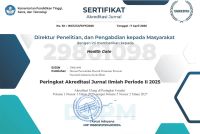
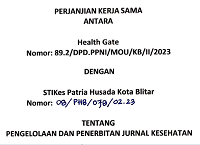
"Health Gate"
ISSN 2986-1098
Indexing:




Published by The Regional Leadership Council of the Indonesian National Nurses Association, Blitar City
Kalimantan Street, Kel.Karangtengah, Kec. Sananwetan, Blitar City, East Java, Indonesia
 Creative Commons Lisences